Understanding vehicle parts can be overwhelming. Many car enthusiasts ask, "What is the difference between universal and direct fit parts?" This question is crucial for making informed decisions when replacing components.
Universal parts offer a flexible solution. They fit a variety of makes and models. However, this variability can lead to challenges. Not all universal parts perform equally for every vehicle. Custom fitting might sometimes be necessary. In contrast, direct fit parts are designed specifically for certain vehicles. They eliminate guesswork. This specificity often results in better performance and easier installation.
Navigating these choices requires knowledge and experience. Choosing the right part impacts not just performance, but also safety. Weighing the pros and cons is essential. Understanding these differences helps you save money and enhance your vehicle’s longevity.
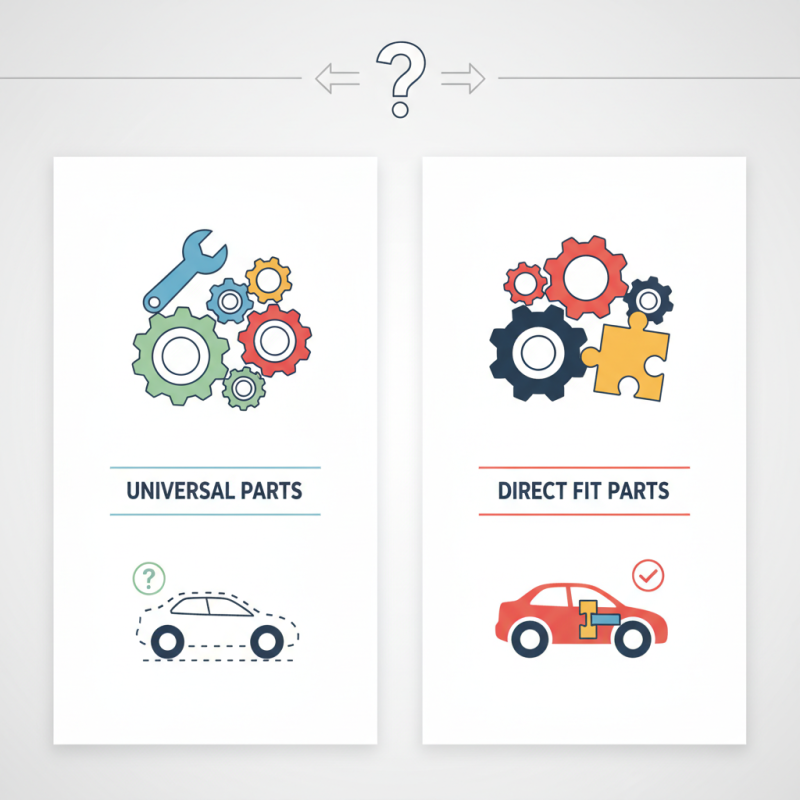
Understanding universal fit parts is essential for anyone working on DIY projects or vehicle modifications. Universal fit parts are components designed to fit a wide range of applications. They offer versatility and can often be more accessible than direct fit options. However, they may not provide the perfect fit for every situation.
When selecting universal parts, always consider the specifications. Measure dimensions carefully to ensure compatibility. Some universal parts may require adjustments or modifications. For the best results, invest time in research. Seek advice from experienced mechanics or enthusiasts.
Tip: Before purchasing, look for user reviews or installation videos. They can offer insights into potential challenges and solutions.
While universal fit parts offer flexibility, they sometimes compromise on performance. A part that fits but does not function optimally can lead to issues down the line. Always weigh the pros and cons before making your choice. Investing in quality materials can save you time and money in repairs.
| Part Type | Description | Advantages | Disadvantages | Usage Examples |
|---|---|---|---|---|
| Universal Fit | Parts designed to fit a wide range of vehicles, not specific to a single model. | Versatile, often less expensive, easier to source. | May require modifications, potential compatibility issues. | Universal air filters, seat covers. |
| Direct Fit | Parts specifically designed to fit a specific make and model. | Perfect fit, easy installation, ideal performance. | Usually more expensive, limited to specific applications. | OEM exhaust systems, replacement headlights. |
: They are components designed to fit various applications. They offer versatility but may not always fit perfectly.
Measure dimensions carefully and check specifications. Research can help avoid mismatches.
Yes, they might not function optimally in every situation, leading to possible issues.
Direct fit parts are engineered for specific models, ensuring better performance and easier installation.
They may seem cheaper initially but can lead to additional costs for adjustments or modifications.
Reviews and installation videos provide insights into challenges and successful solutions from others’ experiences.
Yes, professionals can offer valuable insights on reliability, performance, and compatibility.
Yes, poor alignment and fit may cause installation issues, increasing stress and time.
Consider the pros and cons seriously. Your choice impacts your vehicle’s efficiency in the long run.
Yes, investing in quality materials can save time and money on future repairs.
Understanding the difference between universal and direct fit parts is crucial for anyone involved in vehicle maintenance or modification. Universal fit parts are designed to be adaptable across a range of applications, often requiring additional adjustments during installation. In contrast, direct fit parts are specifically engineered to match the exact specifications of a particular make and model, ensuring a seamless installation process.
When comparing these two types of parts, it's essential to consider performance, compatibility, and cost. While universal parts may initially seem more economical, direct fit options often provide superior functionality and longevity. By evaluating the installation processes and overall benefits, consumers can make informed decisions that align with their preferences and vehicle needs. In summary, knowing the nuances of universal vs. direct fit parts is key to achieving optimal results.

 GLX Auto Parts