2026 Top Diesel Exhaust Parts How to Select?

Time:2026-09-27 Author:Madeline
0%

Selecting diesel exhaust parts is not a cosmetic upgrade. The wrong pipe, sensor, or aftertreatment component can cause poor fit, warning lights, or repeat repairs. How to select exhaust parts for diesel vehicles starts with the vehicle’s exact year, make, model, engine code, and emissions configuration. Check the part number against reliable catalog data, then compare connector shapes, flange positions, pipe diameter, and sensor ports. Small details matter.

Diesel aftertreatment specialist Mark Ellison puts the principle plainly: “Match the part to the complete emissions system, not just the engine.” Treat that as a practical selection rule, and verify it with vehicle-specific fitment information before ordering. A diesel particulate filter, oxidation catalyst, exhaust gas recirculation component, or sensor may look similar across models but still differ in calibration or connections. Close is not always correct.

Consider how the truck is used, too. Frequent short trips, heavy loads, and long highway runs create different operating patterns. Ask whether the replacement meets the vehicle’s specified requirements, and keep service records for future diagnosis. If catalog details conflict, pause and confirm the VIN or consult a qualified diesel technician. Even careful buyers can overlook one connector or bracket. That happens. Price and availability matter, but neither can replace verified fitment. A good choice is the part that fits the application, supports dependable operation, and comes with clear specifications and warranty terms.
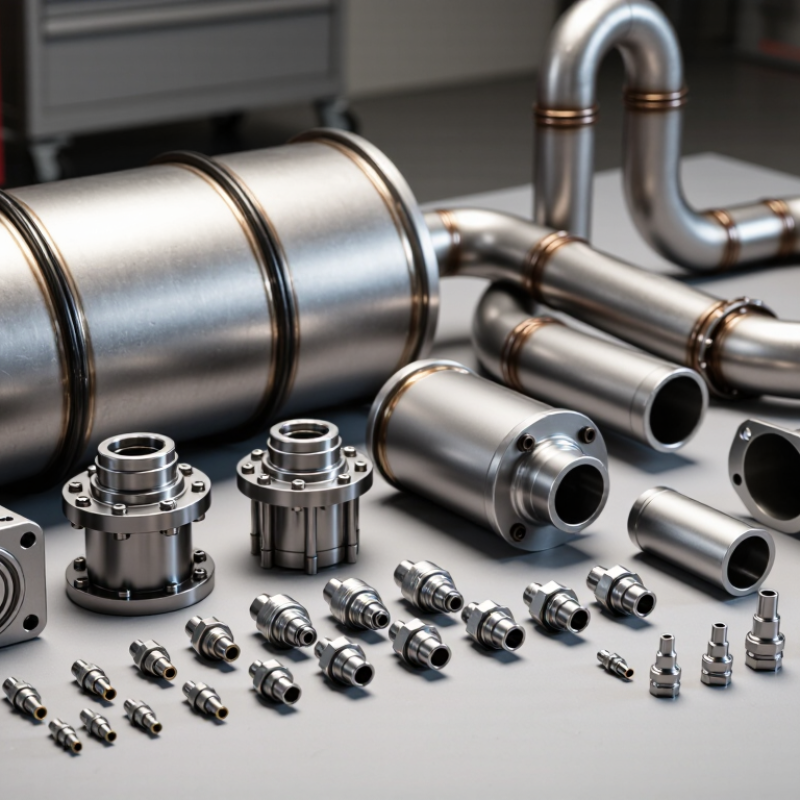
2026 Top Diesel Exhaust Parts How to Select?

Key Diesel Exhaust System Parts and Their Functions

A diesel exhaust system does more than carry fumes away. Its parts control noise and help reduce soot and nitrogen oxide emissions. The diesel oxidation catalyst (DOC) starts the process by oxidizing certain exhaust compounds. The diesel particulate filter (DPF) traps soot in a porous ceramic core. It must periodically burn off collected soot through regeneration.

The selective catalytic reduction (SCR) unit uses diesel exhaust fluid, delivered through an injector, to help convert nitrogen oxides into nitrogen and water. Temperature and pressure sensors report changing conditions to the engine control system. Their readings matter. A faulty sensor can imitate a blocked filter, so replacing the largest component first may waste time. Clamps and gaskets also deserve attention: a small leak can disrupt readings or leave soot marks near a joint. A muffler reduces sound, while the tailpipe directs exhaust away from the vehicle.

When selecting replacement parts, match the engine, system layout, connector type, and original dimensions. Check whether the part is designed for the vehicle’s emissions configuration, not just its model year. Inspect the old component for ash, cracks, melted areas, or uneven deposits; these clues may point to another problem. A clean-looking part can still be incorrect. Fitment details are easy to overlook, and even careful checks may not explain every fault.

2026 Top Diesel Exhaust Parts: How to Select?

Key diesel exhaust system parts operate under different thermal conditions. The chart shows indicative exhaust-gas temperature ranges, which vary with engine design, load, and regeneration strategy.

Part-selection note: The DOC helps oxidize hydrocarbons and carbon monoxide; the DPF captures soot and periodically regenerates; the SCR system reduces nitrogen oxides using a reductant such as diesel exhaust fluid. Match replacement parts to the vehicle’s specifications and account for the temperatures shown.

How to Identify the Parts Your Diesel Vehicle Needs

Choosing the right diesel exhaust part starts with identifying the vehicle accurately. Record its model year, engine size, and exhaust configuration. A vehicle identification number can help a parts specialist check fitment, but verify the result against the service manual. Small details matter. Similar-looking pipes may have different bends, sensor ports, or connection diameters.

Next, locate the problem along the exhaust system. Check for loose clamps, damaged gaskets, soot marks around joints, or dents beneath the vehicle. A warning light or reduced power can point to a fault, but neither identifies a specific part by itself. Read diagnostic codes and inspect related wiring and sensors before ordering a replacement. One clue is not proof.

Diesel exhaust assemblies may include a diesel oxidation catalyst, particulate filter, selective catalytic reduction unit, temperature sensors, and pressure lines. Match the replacement to the confirmed component, connector style, and dimensions. If a filter appears blocked, confirm the cause before replacing it; a sensor fault or leak may be involved. I would double-check uncertain measurements rather than trust a hurried guess. When inspection is unclear, ask a qualified diesel technician to verify the part and installation requirements.

Comparing Exhaust Parts by Material, Design, and Performance

2026 Top Diesel Exhaust Parts: How to Select?

Material, Design, and Performance

Material choice affects heat response, corrosion resistance, weight, and service life. Outokumpu’s Stainless Steel Handbook reports typical thermal expansion near 16 × 10⁻⁶/K for austenitic grades and 11 × 10⁻⁶/K for ferritic grades. These figures vary by alloy and temperature, but they show why joints and hangers need room for movement. Ferritic stainless steel can suit many exhaust sections; higher-corrosion environments may justify a more resistant grade. Aluminized steel can reduce initial cost, though coating damage deserves attention.

Design matters as much as material. Check pipe diameter, bends, flange alignment, weld quality, and sensor-port placement against the vehicle’s specifications. A sharp bend or poorly matched joint can disturb flow and create leak points. For mufflers and aftertreatment housings, compare internal layout and pressure-drop data, not just exterior dimensions. SAE technical literature on exhaust durability highlights thermal cycling and vibration as demanding service conditions. A neat catalog match can still be wrong in real service.

Tips: Inspect the old part for soot trails, cracked welds, and polished contact marks. Confirm measurements before ordering. Ask for material grade and pressure-drop test conditions; “stainless” alone is not a useful specification. Check again after installation, because small alignment errors are easy to miss.

Checking Fitment, Emissions Compliance, and 2026 Compatibility

For 2026 diesel exhaust parts, confirm fitment against the vehicle’s year, engine code, and emissions configuration. A matching model name is not enough. Compare pipe diameter, flange shape, sensor ports, and connector locations with the part being replaced. Even a small bend can cause clearance problems near a crossmember or heat shield. Check the supplier’s fitment data, then verify measurements when possible.

Tips: Keep the old part’s number and take clear photos before removal. Compare mounting points and sensor locations. A catalog can be vague, so pause if the details do not line up.

Compatibility also means checking emissions compliance. Confirm that the replacement is intended for the vehicle’s original emissions system and meets requirements where the vehicle is registered. For 2026 applications, ask whether the listing refers to a vehicle model year or merely a current product version. Those are not the same thing. Keep the invoice and fitment notes. They can help resolve a mismatch, though paperwork cannot fix an incorrectly specified part.

How to Select Reliable Parts and Verify Their Quality

Reliable diesel exhaust parts should come with evidence, not just a polished housing or confident sales claims. Check the part number against the engine and after-treatment system, then compare flange positions, sensor ports, and pipe diameter. Small mismatches can cause installation stress or leaks. Look closer. Ask for material specifications, batch traceability, and documented dimensional and leak-test results. For welded assemblies, request inspection records and clear photos of the seams.

For diesel particulate filters, the U.S. EPA’s Diesel Particulate Filter guidance describes verified systems as capable of reducing particulate matter by at least 85%. That is a useful performance reference, not a guarantee for every replacement part. Ask whether test data applies to the exact configuration being offered, including its substrate and operating conditions. A generic certificate may look reassuring but reveal little.

Inspect the details that are easy to miss: crushed pipe ends, uneven weld beads, damaged sensor threads, or a loose internal substrate. Confirm that replacement sensors and clamps match the specified application. Keep the supplier’s test documents with the service record. One limitation remains: paperwork cannot prove how a part will perform after installation. I would still verify fit, check for leaks, and review diagnostic readings after repair. A clean appearance helps, but it is not quality control.

FAQS

What details should I record before looking for a diesel exhaust part?

Note the model year, engine size, engine code, and exhaust configuration. A vehicle identification number can help check fitment.

Why isn’t a matching vehicle model name enough?

Parts may differ in pipe diameter, bends, flange shape, sensor ports, or connectors. Check the old part closely.

What clues can point to an exhaust problem?

Look for loose clamps, damaged gaskets, soot near joints, or dents underneath the vehicle. A warning light alone proves little.

Should I replace a part based only on a diagnostic code?

No. Read the codes, then inspect related wiring and sensors. One clue is not proof.

Which components might be part of a diesel exhaust system?

It may include a diesel oxidation catalyst, particulate filter, selective catalytic reduction unit, sensors, and pressure lines.

How can I compare a replacement part with the one being removed?

Keep its part number and take clear photos. Compare mounting points, dimensions, bends, and sensor locations.

What should I check about a 2026 listing?

Confirm the vehicle year, engine code, emissions configuration, and exact fitment. Ask whether “2026” means a model year or product version.

What if a particulate filter appears blocked?

Confirm the cause before replacing it. A sensor fault or exhaust leak may be involved.

What can I do when fitment details remain unclear?

Ask a qualified diesel technician to verify the part and installation needs. I’d recheck uncertain measurements rather than guess.

Conclusion

Choosing the right diesel exhaust components starts with understanding how each part supports exhaust flow, noise control, emissions performance, and engine operation. Identify what your vehicle needs by checking its model year, engine configuration, existing components, and any symptoms or maintenance requirements. When considering how to select exhaust parts for diesel vehicles, compare materials, construction, and design features, since these can affect durability, heat resistance, fit, and performance in different driving conditions.

Before purchasing, verify that each component matches the vehicle’s specifications and is compatible with its emissions system and 2026 requirements. Review product details, measurements, installation guidance, and available quality information rather than relying on appearance alone. A carefully selected part should fit correctly, meet applicable emissions standards, and suit the vehicle’s intended use. These checks help reduce installation problems and support dependable operation over time.

Madeline

Madeline

Madeline is a dedicated marketing professional with a wealth of expertise in our company's core offerings. With a keen understanding of the industry, she brings a unique perspective to her role, consistently delivering high-quality content that highlights the superior aspects of our products. As......